In the idyllic region of Hampton Roads lurks a troubling and increasingly alarming reality: human trafficking. It’s not a distant problem that only happens elsewhere. Trafficking is present in our neighborhoods, our schools, our backyards — in places we consider safe.
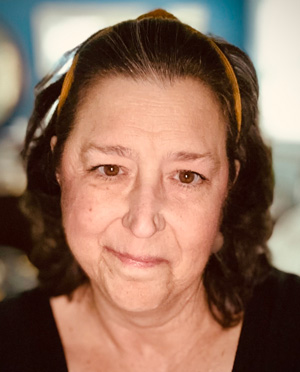
The nonprofit Freekind and Lisa Kersey, its executive director, are stepping up to protect the vulnerable, to fight back and to restore hope. “Our tagline is freedom, hope, belonging, because we feel it’s at the core of everything we do,” Kersey says. “We’re working to restore freedom to people who have had it stolen by traffickers. We are here to reignite hope for a different future.”
Kersey stepped into the role of executive director in 2020, just before the urgent and growing threat surfaced. Her path from healthcare administration to leading such vital work is rooted in faith, purpose and a deep desire to serve her community. When she accepted the role, Kersey said she felt called to make a difference, especially because she saw firsthand how traffickers prey on the vulnerabilities of local youth. She understood that education and recovery are essential components of the solution and are at the heart of Freekind’s work.
Trafficking is not always what people imagine, Kersey says. It’s not just kidnapping in white vans, but often manipulation, grooming and exploitation, happening online or among peer groups.
With our interstate highways and airports, as well as our vibrant military and tourism industries, Hampton Roads has unfortunately become a hotspot for human trafficking. Experts report that this region is experiencing an increase in trafficking, fueled by the high demand for exploitation and the region’s accessibility to traffickers.
Freekind created a curriculum called the Prevention Project, used in schools and groups around the Commonwealth to help parents, teachers and students understand the realities of trafficking and the real danger that could be just next door. Traffickers prey on vulnerabilities — poverty, family trauma and social isolation — and exploit anyone with a perceived “weak spot.”
Kersey emphasizes trafficking can happen to anyone, regardless of socioeconomic background, race or gender — and education is key to enabling children and teenagers to recognize the signs and potential lures of traffickers.
The reality is sobering: trafficking often happens right in the area’s backyard, with victims who are strangers, acquaintances or even family members. The methods are insidious, involving online exploitation and sexual abuse, all under the radar of everyday life. The problem is escalating, requiring increased awareness, stronger laws and community collaboration.
Prevention is arguably the most powerful tool in curbing trafficking before it starts. Freekind’s Prevention Project , designed for middle and high school students, educates youth about the reality of trafficking, how to recognize warning signs and how to stay safe. The program is adaptable, age-appropriate and regularly updated to reflect the dangers of modern digital realities, including social media and online platforms traffickers use to lure victims. It’s not just for children. Freekind, according to Kersey, is equally committed to supporting adult survivors.
Kersey says many survivors have a childhood history of abuse, neglect or of witnessing violence, which traffickers exploit to manipulate and control. Freekind offers comprehensive case management, mental health services, pathways to housing and employment, helping victims transition from survival to thriving.
“We are here to reignite their hopes for a different future,” Kersey says.
Kersey hopes to create a future where no survivor feels alone or forgotten, where one can regain control and feel safe again. She envisions a society where recovery is accessible and holistic, trauma is addressed and hope is restored. “Hope is what keeps all of us going in our toughest times,” she says.
And what Kersey really hopes for? A society where the services of Freekind would not be needed.
Despite the daunting scope of the problem, Kersey remains optimistic. Her goal is to make Hampton Roads and Virginia a model in the fight against trafficking: a community where traffickers think twice before exploiting, and where survivors know they are protected. She advocates for stronger laws when it comes to the buyers, who are driving demand, because without the demand there would be no traffickers, and thus no victims.
Recent legislative efforts in Virginia include requiring annual training as a condition of licensure (casinos, ABC stores), prevention for public colleges/universities and continuing education for those licensed by the board of medicine. Recent legislation has also been passed in Virginia to expand the law enabling criminal record relief for survivors (for crimes their traffickers made them commit). Other states, like New Hampshire, have recently increased penalties for sex buyers, but Virginia has not yet taken that step.
“One way people can help is by attending our annual Gala, scheduled on Saturday, November 8, in Virginia Beach. For more information, visit www.freekindva.org/celebrate,” Kersey says.
Kersey notes that Virginia was one of the last states in the U.S. to implement a law against human trafficking, “It was the last state,” she says, “but there is no reason that we can’t be the first state to find a way to do this together, as a community, to address the whole trafficking triad and become a model for other states.”
TO THE POINT:
Freekind
Address: PO Box 9307, Hampton, VA 23670
Contact: Lisa Kersey, executive director
Phone: 877-227-2321
Email: info@freekindva.org
Website: freekindva.org