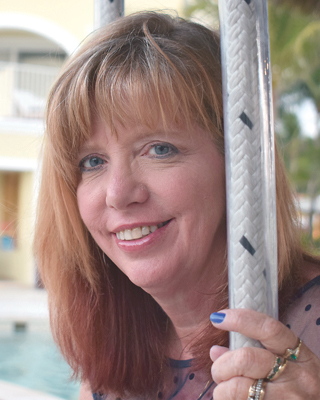
Evelyn’s Wildlife Refuge (EWR) is a 501(c)(3) non-profit organization dedicated to rehabilitating injured and orphaned wildlife native to Virginia. The Refuge holds federal, state and local licenses. In 2008, Newport News-based EWR rehabber, Cindy Lakin, began rehabbing as one of 30 sites and 43 rehabbers in the Hampton Roads area.
Lakin earned her bachelor’s degree in computer science from Christopher Newport University in 1998. In addition to her rehab work, she works a home-based, full-time job while caring for her family. She began rehab work in 2009 and is the EWR’s only fawn rehabber from Virginia Beach to Richmond.
Lakin’s property is EWR’s site for baby deer and otters. It’s not her goal to make the animals pets. A rehabber’s intent is to return them to the wild. The less handled, the better so they don’t get too used to people,” she says.
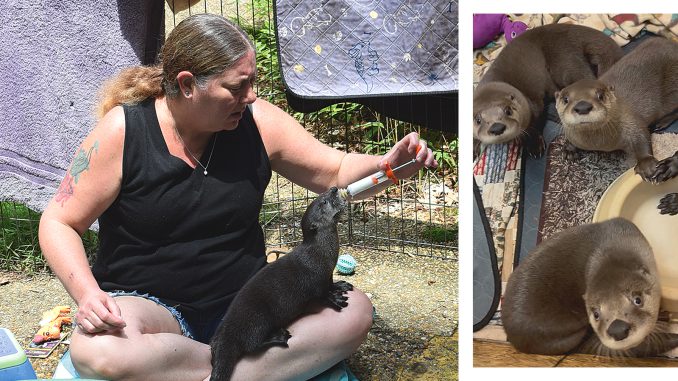
The exception is the otters; she spends more time with them than all her other rehab animals combined. “If I didn’t have this connection with them, they wouldn’t thrive,” Lakin says. “Otters would never be out of their den. That’s how we know they were orphaned.” Her three baby girls and two baby boys will remain in her care for at least one year.
In July, otters Aspen, Cedar, Cherry, Hop and Oakley joined one-year-old Poppy in her gigantic pool enclosure after Lakin taught them to adjust to being in water by starting out in a dog bowl and working their way up to larger and larger kiddie pools. “Poppy never swam and had no idea what the water was,” Lakin says. “Her swimming and fish-catching skills were poor and so was her etiquette of interacting with other otters.”
Otters chirp when they are concerned about something and when one starts, the rest copy the sound. It’s how they “talk” to each other. “Everything is a game and they will play with anything once they start swimming,” Lakin says. “Otters play tag with each other, but everything’s with their teeth.”
Each year, Lakin releases rehabilitated animals after they receive medical care and rabies vaccines. She chooses a different location far out from her location, as Hampton Roads has many waterways they can live in, avoiding waterways with people.
Lakin and her helpers also care for “broken” turtles, from snapping turtles to diamondback terrapins. In the first rehab space are groundhogs, opossums, a baby skunk, a bunny and three baby deer. The rest of the 16 deer are outside. “Everybody always starts out here, then we work them in,” Lakin explains. Many of her animals start in incubators and ultimately move outside until their release.
“I have a group of possums and a group of older groundhogs,” she says of the animals in the second stage of care. “This is the next stage before release.”
Seven fawns, which are Lakin’s largest group of babies, include one that is piebald (a pattern of two colors). Most piebalds are unsteady and tend to have a severe underbite or overbite. This fawn is in great condition. “A lot of times I’ll walk in the deer enclosure and there’ll be box turtles, a group of flying squirrels that come in face-to-face contact with us and more,” she says. “We only do babies with spots in Virginia.”
There are five foxes in a box up in a tree over the deer. “They had mange, were emaciated, had secondary bacterial and eye infections,” Lakin says.
None of EWR’s rehab facilities are open for public to visitation as that would violate their rehab license. “Occasionally, I’ll do things with certain animals,” Lakin says. “I like to gather people’s interest in preserving them; so there’s an educational aspect involved.”
“Rehab work is very expensive,” says Meredith Broadhurst, EWR’s president. “Unless you have some type of support, you are paying a ton of money out-of-pocket. Pre-pandemic donations of $80,000 to $90,000 on our Facebook button were only half of that last year; That’s what we rely on. Their care cost about $3,000 a month just for the otters’ fish and more than 10 EWR animals’ weekly veterinary care.”
EWR is fortunate to receive a lot of donations, but the funding doesn’t support its entire budget.
“As a volunteer, there are so many ways to help,” volunteer Maura Santoni says. “You can rescue, transport, do meal prep, feedings, clean and maintain enclosures and cages, build and repair enclosures, donate your gently-used items such as towels, blankets and crates. Or donate through the Amazon Wish Lists and EWR’s Facebook page. And if you find a lost wild animal, call Tidewater Wildlife (an entity of EWR) at 757-255-8710.
“Our biggest challenge is helping people understand that wildlife exists around us and if you leave them alone, they will coexist with you just fine,” Lakin says with a smile.
TO THE POINT:
Evelyn’s Wildlife Refuge
Phone: 757-434-3439
Email: evelynswildlife@gmail.com
Website: evelynswildlife.wixsite.com/rehab
Facebook: facebook.com/evelynswildliferefuge